Strong cost focus
- Common architectures, automation and strategic sourcing are key to drive profitable growth through cost competitive products with best-in-class product design and quality.
- In addition, continuous cost improvements are an important part of our strategy – achieved by improving cost structures and developing methods, processes and skills.
- We have accelerated structural cost reductions and execution of product cost measures to restore margins in response to the continued restrained consumer discretionary spend and competitive pressure in the market.
- A new simplified organization was implemented in 2024, including the combination of the two business areas Europe, and Asia-Pacific, Middle East and Africa into one business area from Jan 1, 2024.
- The number of employees was reduced by approximately 20% from 2022 to 40,787 employees at year end 2024.
- Staff related savings and product cost reductions contributed to cost savings of SEK 4bn in 2024.
- For 2025 we target savings of SEK 3.5-4bn, focusing primarily
on product costs through best-cost country sourcing, value engineering, and global supplier consolidation.
- Electrolux manages working capital to release resources that can be invested in growth activities.
- High share of variable costs – about 70% of the Group’s total cost base.
Focus areas to increase efficiency and drive profitable growth

The illustration shows which areas that will primarily drive cost efficiency but also contribute to profitable growth.
High degree of variable costs
| SEKbn | 2024 |
|---|---|
| Net sales | 136 |
| Direct material | -56 |
| Sourced products | -14 |
| Other variable costs | -28 |
| Operational structural cost | -27 |
| Innovation and marketing structural cost | -10 |
| EBIT excl. non-recurring items | 1.7 |
| Variable cost | ~70% |
| Structural cost | ~30% |
Variable costs:
Direct material incl. raw material and components. Sourced products incl. small appliances, vacuum cleaners, air conditioners, microwaves, etc. Other variable costs incl. direct labor and other variable production costs as well as costs for warranty and logistics.
Structural costs:
Operational structural costs incl. all fixed factory and warehousing costs, depreciation and administration. Innovation & marketing structural costs.
Benefits enabled by our global re-engineering initiative
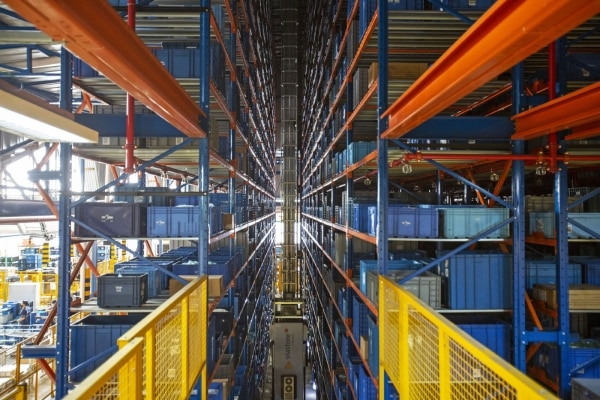
- Exiting 2024, we finalized the SEK 8bn investments and efficiency initiative launched in 2018 focusing on investments in global architectures and automation in selected factories in the Americas and Europe.
- The re-engineering initiative has been a vital enabler in our efforts to drive profitable growth through strengthened cost competitiveness and improved mix.
- Key benefits include increased operational efficiency and flexibility, strengthened production cost competitiveness, increased innovation speed to market as well as a sharpened product offering through design and quality.
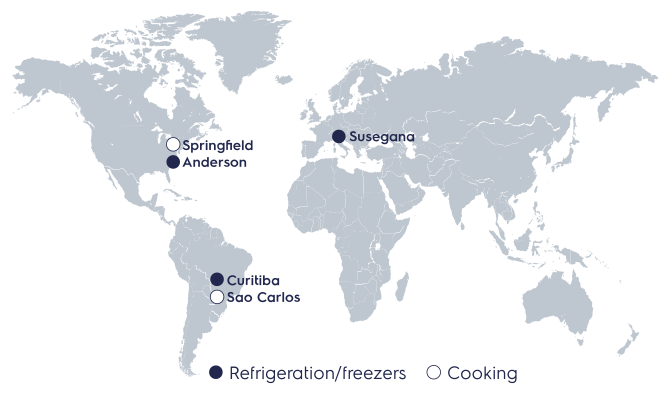
- Focus in the re-engineering initiative has mainly been on North America related to the investments in Anderson and Springfield.
- Cost savings are mainly driven by direct material savings and improved labor productivity.
- Mix improvements are driven by increased share of new premium products produced compared to before the investments.
- In all our business areas, the investments in sustainable consumer experience innovation and modern platforms in recent years have resulted in products that earn a high degree of appreciation from consumers.
- The re-engineering initiative also brings sustainability benefits such as improved energy efficiency and safer working environment.
- Read about how our investments in the Sao Carlos cooking facility in Brazil have resulted in a sharper product offering, which is gaining market shares in attractive categories, while at the same time being produced in a more cost and resource effcient way, at preprod-www.electroluxgroup.com/attractive-ovens-Sao-Carlos/
Executing on our global re-engineering investments
Automation and common platforms strengthens competitiveness

Common architectures and automation are key to drive profitable growth
- Cost competitive, high-quality products are vital to drive profitable growth.
- The re-engineering investment initiative has significantly increased the use of Group-wide technology and common product architectures for refrigerators/ freezers and cooking products.
- Benefits from Group-wide technology and product architectures in automatedproduction include:
- Sharpened offering with more relevant features at lower costs.
- Increased speed of innovation by leveraging and accelerating global technologies.
- Improved product design – easier and more efficient to apply updated designs.
- Best-in-class product design and quality.
- Read about how the many benefits of the modular approach enable new products in higher value categories to increase their share of sales at www.electroluxgroup.com/new-cooking-products-drive-enhanced-value-share
Leveraging global scale in strategic sourcing
- Strategic sourcing is the single most important initiative to reduce product costs.
- We are accelerating product cost savings by increasing sourcing from best-cost countries as well as by continuing to consolidate our supplier base and number of components by further leveraging our common product platforms.
- In 2024, Electrolux purchased raw materials and components for SEK ~52bn, of which SEK ~21bn referred to raw materials .
- The global purchasing function coordinates and administers the vast majority of all direct material purchasing.
- By increasingly introducing new products on a common architecture, the Group’s global scale can be leveraged in terms of procurement and R&D.
- Enables both fixed and variable cost reductions.
- Increases flexibility by allowing the customization of products using a limited number of standardized modules.
- Increases economies of scale in the sourcing of components.
- The Electrolux Responsible Sourcing program supports a global effort to make the right decisions on suppliers and promote the sustainability performance of the supply base.
- A global credit insurance program is in place for many countries to reduce credit Electrolux Group offers a select number of suppliers the opportunity to utilize Supply Chain Finance programs.
Raw material exposure 2024

Sensitivity analysis, year-end 2024
| Raw materials | Change +/- | Pre-tax earnings impact -/+, SEKm |
|---|---|---|
| Stainless steel | 10% | 250 |
| Carbon steel | 10% | 770 |
| Plastics | 10% | 490 |
Changes in raw materials refer to Electrolux prices and contracts, which may differ from market prices. The figures in the sensitivity table are rounded.
Combining global benefits with deep local understanding
- Being global with a local presence and knowledge of each regional market means better adapting to changing consumer demands and sustainability related requirements.
- Three well-established brands – AEG, Electrolux and Frigidaire – serve different regions and market segments.
- While local understanding is a strength, the benefits of being global are equally important. This as scale in technology deployment and sourcing are key to ensure competitiveness both in terms of innovation and costs.
- Electrolux Group really knows its consumers, evidenced by the high online consumer star ratings for our brands’ products.
The Frigidaire consumer values our legacy of quality, the trusted ownership experience, and innovative solutions making their daily lives better

Improving stability and mitigating against financial fluctuations
- Global presence makes Electrolux less sensitive to macroeconomics in specific market regions. This helps to smooth out seasonality and fluctuations in economic cycles – to mitigate against financial performance fluctuations.
- The Group’s global presence, with manufacturing and sales in a number of countries, offsets exchange rate effects to a certain degree.
- The principal exchange rate effect arises from transaction flows – when purchasing and/or production is carried out in one currency and sales occur in another currency.
- The major currencies for the Electrolux Group are the USD, BRL, CAD, EUR, CHF, GBP, MXN, CLP, AUD, THB and CNY.
- Read more about Electrolux currency exposure www.electroluxgroup.com/en/currency-exposure
Sales by region, 2024

Digitally integrated supply chain and manufacturing
- Digitalization helps drive improved productivity and flexibility in Electrolux operations through:
- Improved visibility and planning.
- Installing a digitally managed environment within factories that monitors operational information in real-time.
- Speed and accuracy are what customers and consumers expect, and are even more important as online sales grow.
- Electrolux is transforming from a traditional manufacturing efficiency & push approach to demand & service driven supply chain model.
- Control tower concept allows us to get an end-to-end view of the supply chain.
- Data driven decision making based on transparent processes and globally aligned data.
- Agile ways of working support the digital transformation of our operations.
- Nurturing a digital innovation culture.
Digitalization optimizes supply chain including managing inventory levels