Sustainability – a key business driver
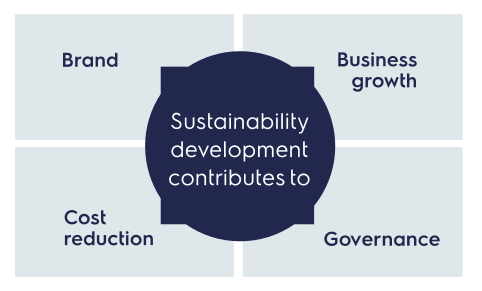
- Our leading position in sustainability creates opportunities to grow sales and lower costs.
- A strong sustainability reputation is key to build trust and achieve a strong stakeholder support. This as a large proportion of corporate reputation is built on Environmental, Social and Governance (ESG) dimensions1).
- Sustainability development contributes to brand and product differentiation, employer branding, and access to new forms of capital, e.g. green bonds.
- Cost reductions can be achieved through lower energy and material cost as well as lower cost due to waste reduction and less injuries.
- Sustainability is increasingly on the agenda of consumers and retailers and creates thereby opportunities for business growth. Profitability is typically higher for products where resource efficiency is a key feature.
- Sustainability is an essential aspect of good governance, contributing to overall risk management. The Electrolux Group Code of Conduct forms the platform for our efforts to ensure high standards of ethics and human rights within the Group and summarizes its key policies. Processes to mitigate risk relating to sustainability include for example, management systems in operations and the responsible sourcing program.
1) Source: www.reptrak.com
Sustainability is a key business driver
More profitable products
- Consumers, retailers and authorities increasingly prioritize sustainability.
- Nearly 60% of affluent Americans are willing to pay more for environmentally friendly products2).
- Globally, 2 out of 3 consumers consider sustainability an important factor when buying electrical appliances3).
- In Europe, 35 million households have started washing at 30°C since 2020; 44% of households now wash at 30°C, while some 86% of households have tried to reduce energy use in the past year4).
- Our main brands, Electrolux, AEG and Frigidaire, all share the same ambition to offer solutions that enable more sustainable living.
- Our most energy and water efficient products accounted for 24% of total units sold and 33% of gross profit in 2024. The most resource-efficient products have consistently had a higher margin in recent years.
- More sustainable products offer greater consumer benefits. Read about our new, smart energy efficient laundry products that save time, water and energy at www.electroluxgroup.com/new-smart-laundry-range
2) Ipsos (2022). Who are the affluent environmentalists? An Ipsos point of View.
3) Foresight Factory; 9,012 online respondents, global average, Jan. 2022.
4) Truth About Laundry – report commissioned by Electrolux Group. The research is based on data collected from 14,000 adults across 14 European markets between December 20, 2022, and January 16, 2023.
Our most resource-efficent
products have a higher margin

*Percent of total units sold in 2024 for Electrolux Group.
**Percent from gross profit in 2024 for Electrolux Group.
Note: Resource-efficient products that meet strictly defined technical
specifications and conform to local standards for
high efficiency. Since 1997, Electrolux has internally tracked
the most resource-efficient products sold in the Group and
each year the criteria have become more stringent.
New revenue streams
- Providing services and solutions that maximize product performance and lifespan is a natural part of our offering.
- An increased focus on the aftermarket, with service and spare parts sales, consumables, and accessories, supports consumers’ own sustainability ambitions.
- The aftermarket business is a growing part of our sales, contributing to both profitable growth and sustainable development.
- We strive to strengthen relationships with consumers throughout the entire lifecycle of our products.
- Our investment in the aftermarket and ecosystem around our products creates opportunities for improved direct contact with consumers, which in turn increases consumer loyalty and benefits sales overall.
Aftermarket services contributeto both profitable growth andsustainable development
Lower costs
- Greater resources efficiency is a priority as it contributes to further strengthening our competitiveness.
- In operations – to reduce operational and manufacturing costs and risk exposure.
- 48% less energy used per manufactured product 2024 vs. 2005.
- 64% of the total energy use in Group operations came from renewable sources in 2024.
- 50% improved water efficiency in operations 2024 vs. 2020.
- In products – to strengthen our offering, including lowering costs for the consumer in the usage phase.
- 31% less CO2 emissions for use of sold products 2024 vs 2021 (Scope 3).
Greater resource efficiency reduces costs

Part of our strategy and corporate identity
- Sustainability is part of our corporate identity and thereby a fundamental and integrated part of our corporate culture. We have first mover advantage, with a clear aim to continue to be the industry sustainability pioneer.
- In the 1990s, we were the first global appliance company to focus on sustainability – which has been at the heart of our strategy ever since.
- Since 2020, part of Electrolux Group’s long-term incentive program for senior leaders is linked to reduced carbon dioxide emissions.
- The Group has received several recognitions for its sustainability work and is included in the Dow Jones Best-in-Class Europe Index.
- The framework For the Better 2030 includes key sustainability areas where Electrolux Group can make a difference. They cover all the stages in our value chain – from R&D and suppliers, through our own operations and consumer use, to the end of life of our products, where we have an impact.
- Read more about Electrolux Group’s key sustainability areas, goals and results at www.electroluxgroup.com/en/sustainability


For the Better 2030
| Better Company | Better Solutions | Better Living |
|---|---|---|
| Drive resource-efficient operations | Lead in energy and resource efficient solutions | Make healthy and sustainable eating the preferred choice |
| Act ethically, lead in diversity and respect human right |
Offer circular products and business solutions | Make clothes last twice as long with half the environmental impact |
| Drive supply chain sustainability | Eliminate harmful materials | Make the home a healthier place to thrive in, with half the carbon footprint |
| Climate Goals | ||
UN Sustainable development goals
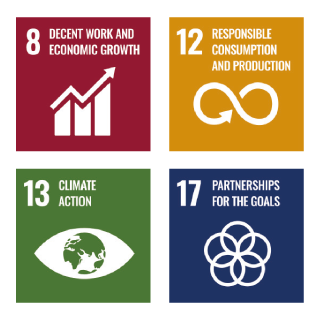
- The For the Better 2030 framework contributes to several of the UN Sustainable Development Goals (SDGs), which provide the global community with a roadmap for how to combat global challenges related to economic, social and environmental sustainability.
- We focus primarily on the four SDGs where we see that we can contribute the most:
- SDG 8 – Decent Work and Economic Growth.
- Providing decent work and economic growth is related to our manufacturing operations. Our Workplace Policy and Supplier Workplace Standard set out decent labor standards as a requirement for our operations and suppliers.
- SDG 12 – Responsible consumption and production.
- Promoting responsible consumption and production is the most significant SDG for Electrolux Group. We strive to bring resource-efficient products, manufactured in a sustainable way, to as many people as possible around the world.
- We have set ambitious targets to reduce the footprint of our products and production, including our suppliers.
- We also increasingly consider the end-of-life phase of our products by designing for reparability and recyclability, and by offering repair services and product take-back.
- SDG 13 – Climate Action
- Our action on climate change is reflected in our goals to reduce our carbon dioxide footprint, including product usage, production and transportation.
- Having reached our ambitious 2025 science-based target already in 2022, we have set a new science-based target for 2030, which includes an even greater share of the value chain than before towards our long-term climate goal of a net-zero value chain by 2050.
- SDG 17 – Partnerships for the Goals
- We engage in numerous partnerships to work toward the SDGs
- SDG 8 – Decent Work and Economic Growth.
The four SDGs where we can
contribute the most
Our net-zero value chain roadmap 2050
- Electrolux Group was one of the first 100 companies globally to set a science based climate target and to have this approved by the Science Based Targets initiative in 2018.
- Our first target set for 2025, was to reduce Scope 1 and Scope 2 carbon dioxide emissions from our own operations by 80% from 2015 levels and to reduce emissions from product use, Scope 3, by 25%.
- Already by 2022, we had reduced Scope 1 and Scope 2 emissions by 82%, and Scope 3 by >25%.
- Having achieved our fist science-based target three years ahead of schedule, in late 2023 we set a new SBT, which by 2030 will see us further significantly reduce carbon dioxide emissions in our operations and from the value chain including the use of our products.
- We also broadened our target for 2030 to include an even larger proportion of the value chain than before, with the long-term ambition of ensuring net-zero carbon emissions throughout our value chain by 2050.
Product usage accounts for ~85% of the CO2 climate impact of an appliance*

New and expanded Science Based Target
- Scope 1 and 2 emissions targeted to be reduced by 85% by 2030 compared to the base year 2021.
- At our production facilities, efforts continue to minimize the use of energy.
- We are taking further steps to raise the percentage of renewable electricity used in our factories from the already high 94%.
- We have begun to phase out the use of fossil fuel, moving towards electrifying equipment and processes.
- Scope 3 (other indirect emissions) targeted to be reduced by 42% of 2021 levels by 2030. The Scope 3 target has been broadened by adding the categories Purchased goods and services, Upstream transportation and distribution, and Business travel to the category Use of sold products, which has also been expanded.
- Use of sold products
- Since the majority of emissions, ~85%, occur in the use phase of our products, the most important thing we can do within Scope 3 is to make our products even more energy efficient and create the conditions for consumers to be able – and willing – to use them in ways that minimize climate impact.
- We are also actively working to change our product mix so that highly energy-efficient products constitute a growing proportion of total sales, which also makes a positive contribution to profitability.
- The rate of emissions reduction in the use phase is also dependent on the degree to which consumers have access to renewable electricity in the countries where they live.
- Purchased goods and services
- In order to reduce indirect emissions, it is important that the materials in our products are produced in a climate-efficient manner and with as high a degree of circularity as possible.
- Our ambition is to prioritize collaborations with suppliers that have the most carbon dioxide efficient steel production and that use as large a proportion of recycled metal as quality requirements allow.
- Similarly, we strive to increase the proportion of recycled plastic in our products. For example, our range includes fridges and freezers with inner liner walls made from 70% recycled plastic.
- In 2025, we set a new recycled materials target that aims to increase the share of recycled steel and plastic by weight used in the products manufactured by the Group to 35% by 2030. This almost doubles the weight of recycled materials in scope compared with our previous plastic target. Adding steel to the target increases the material in scope to more than 40% of all material purchased by the Group.
- Upstream transportation and distribution
- Transport to and from our production facilities and warehouses is an important part of our value chain. We are actively working to move transport on land from road to rail.
- In parallel, a transition to trucks powered by either electricity or biofuel is underway, and we are currently installing battery chargers at our manufacturing facilities and warehouses.
- Continous progress in reducing emissions from land and sea transportation, which from 2015-2024 decreased by 23% and 44%, respectively. In 2024, 28% of our sea transports were made with ships powered with more sustainable fuels.
- Business travel
- Even if business travel overall has a significantly smaller climate impact than other Scope 3 categories, the inclusion of business travel in the science-based target is an important signal within the organization that everyone can and needs to be involved to ensure that we achieve our climate goals.
- We aim to half our business travel. To support the carbon transition, investments are made in IT tools and infrastructure to facilititate digital meetings as an alternative.
- Use of sold products
- By including these additional categories in Scope 3, we further build commitment in parts of the value chain where we have the greatest opportunity to drive progress together with our partners and suppliers on the journey towards the goal of a net-zero value chain.
Driving corporate climate action through Science Based Targets