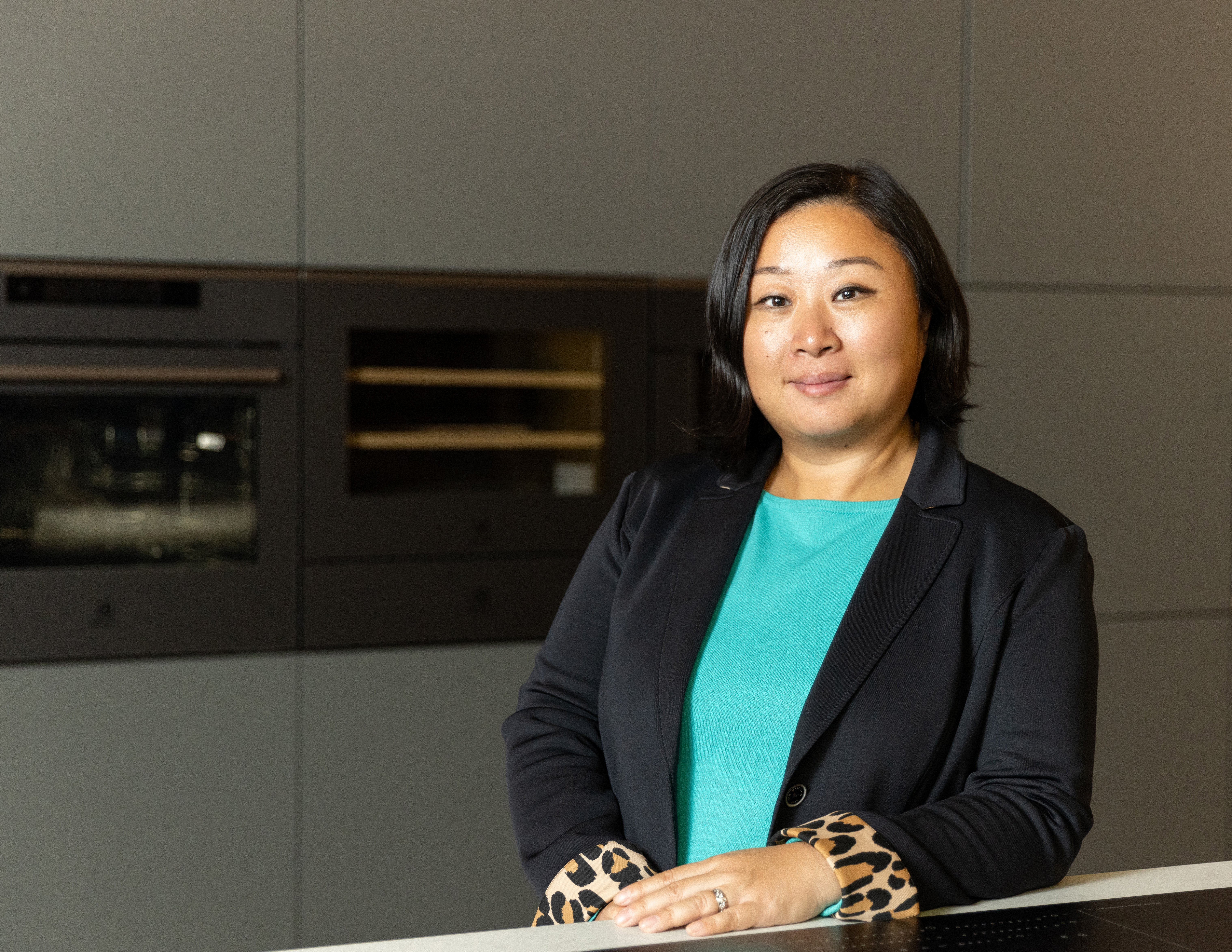
Electrolux Group's Chief Product Officer, Michelle Shi-Verdaasdonk, took on her role in February 2026. In this interview, she reflects on her first year, how the Product Organization is set up around consumer satisfaction, and the priorities shaping Electrolux Group's product pipeline.
You've been in the role of Chief Product Officer for almost a year now. What are your reflections so far?
It's been an exciting and rewarding first year. What has stood out most is the opportunity to bring different parts of the value chain together around a common goal: creating products that consumers love.
The role gives me a unique responsibility across product portfolio, innovation, design, engineering, connectivity and procurement. It has reinforced a belief I've developed throughout my career: great products come from strong collaboration and a deep understanding of consumer needs.
It has also been a busy year, bringing teams closer together, accelerating several new product introductions that are coming to our consumers soon and revisiting our three-year product roadmap with the regional Product Line teams to ensure that we absolutely have the right products in the plan to win.
Perhaps my biggest reflection is that innovation is most effective when strategy and execution move together. A strong vision is important, but delivering on that vision is ultimately what matters.
Our vision is to be the number one household appliance company for consumer satisfaction, delivering outstanding lifetime experiences that always get better. How does that drive the work of the Product Organization?
Consumer satisfaction is the foundation of everything we do.
Every decision starts with understanding consumers' needs, expectations and pain points. Our products play an important role in people's daily lives, so we need to create experiences that are intuitive, valuable and continue to improve over time.
For my team, that means maintaining a strong connection between consumer insights, brand positioning and product development. Working with our regional teams, we need to understand where we can create meaningful differentiation and deliver the greatest value.
Innovation is an important part of that journey, but consumers don't buy technology for technology's sake. They choose products that solve problems, simplify everyday tasks and create better experiences.
What's particularly exciting today is our ability to continue improving products long after they enter the home. Through connectivity, software, AI, consumables and accessories, we can make appliances more intuitive, personalized and helpful over their lifetime, helping us deliver on our ambition of creating experiences that always get better. For example, using over-the-air (OTA) updates, we just upgraded our connected ovens in Sweden with a new pizza functionality.
When consumer satisfaction guides our decisions, it helps us create stronger products, stronger brands and longer-lasting relationships with consumers.
Tell us more about how your Product Organization is structured and why.
The Product Organization is built around one objective: creating the best possible products and experiences for consumers, while creating lifetime value. That's why we have brought together product portfolio, research & development (R&D), design, electronics, connectivity and procurement. All in all, this organization has full end‑to‑end responsibility for planning and delivering our technology, product and ecosystem roadmap — on time, on cost, on specification and on quality — while enhancing distinctive branded design and sustainability leadership.
This structure helps us to make decisions faster, align priorities more effectively and ensure what we bring to market reflects both consumer needs and our brand ambitions. It also creates a stronger link between long-term strategy and execution, enabling better decision-making and stronger outcomes for consumers. Also having all the R&D functions in one team allows us to drive engineering excellence and work on AI tools to drive down time to market, while improving engineering robustness, quality and better productivity in innovation.
Looking ahead, what are your priorities?
We have a strong pipeline of products that will be launched during 2027 and 2028, reinforcing our progress in design, innovation and key platforms. Now we need to keep the strong discipline and cross-functional collaboration to execute and bring differentiated products to the market.
Quality is a key priority for the product organization in 2027. Our brands have been built on the trust of our consumers — we need to ensure that we uphold the quality promise of our products to ensure quality is designed into our products.
Another focus is navigating an increasingly complex and fast-changing global environment. Product development today requires balancing innovation with resilience, ensuring we can continue bringing great products to market despite geopolitical, regulatory and supply chain challenges. For example, the procurement team continues to bring supplier innovation into the organization, while executing the actions needed to maintain our cost leadership.
Your career spans multiple parts of the value chain. How does that experience help you drive product strategy and innovation today?
Working across manufacturing, procurement, supply chain and product development has given me a deep understanding of how products come to life from end to end.
When evaluating product strategies today, I can look beyond the concept itself and consider what it will take to execute successfully across the value chain. Great ideas only create value when they can be delivered reliably, efficiently and at scale.
My experience has also shown me how interconnected every part of the business is. The strongest innovations come from connecting consumer insights, brand positioning, technology, sourcing and manufacturing capabilities.
At the end of the day, innovation is not just about creating something new. It's also about creating something meaningful and ensuring you can successfully bring it to consumers.